

Journals >Laser & Optoelectronics Progress



Fiber Optics and Optical Communications
Funan Zhu, Jiawei Li, Shaowen Lu, and Weibiao Chen
Laser & Optoelectronics Progress
- Apr. 19, 2024
- Vol. 61, Issue 7 (2024)
Fiber Optics and Optical Communications

Chao Liu, Xueying Li, Kaihe Zhang, Bin Lan, Tianjun Dai, and Hao Xian
Laser & Optoelectronics Progress
- Apr. 19, 2024
- Vol. 61, Issue 7 (2024)
Fiber Optics and Optical Communications
Hai Li, Yongjun Li, Yuanhao Liu, Xing Li, Yu Li, and Shanghong Zhao
Laser & Optoelectronics Progress
- Apr. 19, 2024
- Vol. 61, Issue 7 (2024)
Fiber Optics and Optical Communications
Xinyu Chen, Shaowen Lu, Funan Zhu, Yongbo Fan, Qiong Hu, Haowei Xia, Jianfeng Sun, Ren Zhu, Xia Hou, and Weibiao Chen
Laser & Optoelectronics Progress
- Apr. 19, 2024
- Vol. 61, Issue 7 (2024)
Fiber Optics and Optical Communications
Chaoyang Li, Jianfeng Sun, Zhiyong Lu, Yu Zhou, Longkun Zhang, Yuxin Jiang, Lingling Xu, Hanrui Pan, Honghui Jia, Haoming Yuan, Weibiao Chen, and Hui He
Laser & Optoelectronics Progress
- Apr. 19, 2024
- Vol. 61, Issue 7 (2024)

On the Cover

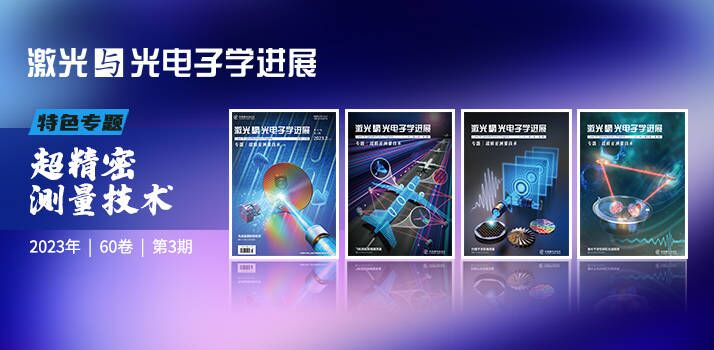
Single photon lidar is widely used to obtain depth and intensity information of 3D scenes. In a complex scene, there are multiple targets with different depths and different reflectivity. In the case of few return photons and high background noise, traditional methods cannot make targeted treatment for these targets. As a result, a single photon lidar depth estimation technique for complex scenes is proposed. The method makes full use of the time-domain correlation of the echo signal to conduct global multi-depth windowing on the lidar 3D point cloud data in the time domain. Additionally, the weighted filling of vacant pixels uses spatial correlation. Under the optimization framework, a Poisson distribution model is established based on the pre-processed lidar 3D point cloud data. To acquire an accurate depth measurement, the minimum of the cost function is finally found using the alternating direction multiplier approach. Experimental results demonstrate that the proposed method enhances the reconstruction signal-to-noise ratio of the estimated depth image by at least 15% compared with other methods. Compared with other methods under complicated sceneries from a distance, it successfully raises the estimated quality of depth images and increases the robustness to a low photon level.
Laser & Optoelectronics Progress
- Sep. 26, 2023
- Vol. , Issue (2023)
On the Cover
As an important passive optical component, long-period fiber gratings (LPFGs) have all the advantages of optical fiber sensors, such as anti-electromagnetic interference, corrosion resistance, high sensitivity, small volume, and compatible with fiber system, which have wide applications in the field of optical fiber sensors and optical communications. The paper summarizes the principle of mode coupling, the methods of theoretical analysis, fabrication techniques, and applications of the LPFGs in the field of optical fiber sensors and optical communications. The fabrication techniques include the laser inscribing techniques (UV laser, carbon dioxide laser, and femtosecond laser writing techniques) and non-laser techniques (arc discharge, mechanical micro-bending, cladding etching, fusion tapering, ion implantation, and acoustic wave modulation techniques). For the sensing application of the LPFGs, the characteristics of gratings on the temperature, strain, bending, torsion, and surrounding refractive index have been summarized. And their applications as all fiber filter, mode convertor, polarizer, and mode coupler have also been discussed for the applications in optical communication system. The paper is written in a tutorial style. We aim to provide a general reference for students, academics who are going to join in this field.
Laser & Optoelectronics Progress
- Sep. 26, 2023
- Vol. , Issue (2023)
On the Cover
Speckle projection profilometry (SPP) encodes depth information of a scene by projecting a single random speckle pattern and establishes the global correspondences between stereo images using speckle matching technology, thereby achieving a single-shot three-dimensional (3D) reconstruction. However, it is still difficult to encode a globally unique feature for every pixel in an entire measurement space by projecting only a speckle pattern due to the measured object surface with complex reflection characteristics and the perspective differences between stereo cameras. The resulting mismatching problem leads to the low measurement accuracy of SPP, making it difficult to meet the high-precision measurement requirements of some industrial scenarios. In this study, we propose a speckle structured-light-based 3D imaging technique and its sensor design method using a vertical-cavity surface-emitting laser (VCSEL) projection array. The proposed 3D structured-light sensor integrates three miniaturized speckle projection modules to project a set of speckle patterns with different spatial positions, spatially and temporally encoding the depth information of the measured scene efficiently. In addition, a coarse-to-fine spatial-temporal speckle correlation algorithm is proposed to improve the measurement accuracy and reconstruct the fine shapes of complex objects. Experiments, including precision analysis, 3D model scanning, detection of small target metal parts, and measurement of complex scenes, indicate that the proposed 3D structured-light sensor can realize high-precision 3D measurements at a long distance over a large field of view, which can further be applied to industrial scenarios such as part sorting and robot stacking.
Laser & Optoelectronics Progress
- Sep. 26, 2023
- Vol. , Issue (2023)
On the Cover
Three-dimensional (3D) imaging enables the elaborate numerical description of the physical space, leading to one of the most critical technologies in consumer electronics, automatic drive, machine vision, and virtual reality. The existing 3D imaging is limited by the physical mechanism of the traditional refraction element and diffraction optical element, so it is difficult to meet the performance requirements of miniaturization, integration, multi-function, large field of view, large numberical aperture, high spatial resolution, and so on. Metasurface, an intelligent surface composed of subwavelength nano-antenna arrays, can realize the artificial control of the amplitude, phase, polarization, and other parameters of the light field. Therefore, it has the advantages of small size, high spatial bandwidth product, high efficiency, multi-function, large field of view, and so on, showing the potential as a new generation of optical elements for 3D imaging. In this paper, the progress of mesurface-based 3D imaging technology is reviewed. Based on the analysis of the physical mechanism and application advantages of the metasurface, the application and performance of the mesurface-based 3D imaging technology such as structured light technology, time-flight method, optical field imaging, and point spread function engineering are introduced in detail. The challenges and future development directions of metasurface-based 3D imaging technology are summarized and prospected.
Laser & Optoelectronics Progress
- Sep. 26, 2023
- Vol. , Issue (2023)
Top Downloads
- Laser & Optoelectronics Progress
- Vol. 60, Issue 24, 2400001 (2023)

- Laser & Optoelectronics Progress
- Vol. 60, Issue 24, 2401001 (2023)
- Laser & Optoelectronics Progress
- Vol. 60, Issue 24, 2410002 (2023)
- Laser & Optoelectronics Progress
- Vol. 60, Issue 24, 2410003 (2023)
- Laser & Optoelectronics Progress
- Vol. 60, Issue 24, 2412005 (2023)
- Laser & Optoelectronics Progress
- Vol. 60, Issue 24, 2415003 (2023)

© Copyright 2018-2021 | Chinese Laser Press. All Rights Reserved 沪ICP备15018463号-20